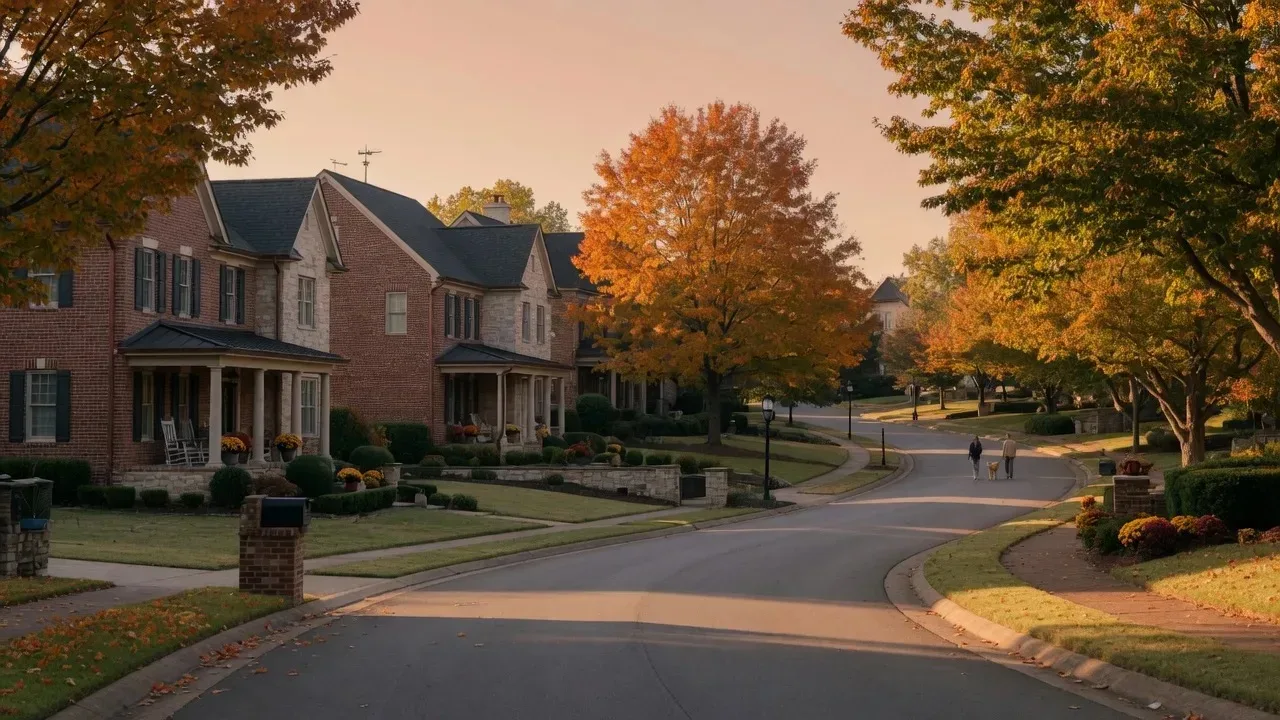

Is it a buyer's or seller's market right now? It is the question that comes up in nearly every conversation I have these days, in person, on the phone, and in the Middle Tennessee buying and selling groups I follow online. The honest answer is more interesting than a label: Greater Nashville has become a market of layers, where your price band and your neighborhood decide which side of the table holds the power. Here is the plain-English read on the numbers, and what it means for your next move.
Why everyone is asking this right now
After a long stretch where sellers seemed to hold every card, the mood has flipped, and the question has followed. Agents across the metro report the same thing: the buyer's-versus-seller's question surfaces in every listing appointment and every buyer consult. When one Nashville firm ranked every ZIP in the region on market conditions this summer, no ZIP code landed in true seller territory. Nine ranked as buyer's markets and the rest sat in the balanced middle.
People feel the shift before the data catches up. Homes sit longer than they did two years ago. Price cuts are commonplace. Buyers who once had to waive inspections and write offers sight unseen are suddenly allowed to ask questions again. If that describes what you are seeing on your real estate app of choice, you are not imagining it.
What the terms actually mean
Before the numbers, a quick translation, because the labels get thrown around loosely. The standard measure is months of supply: how long the current inventory would last at the current sales pace. Divide the active listings by the number of homes selling each month, and you get a number that tells you who has leverage.
Below about four months of supply is a seller's market, sometimes a strong one. Between four and six months is a balanced market, where neither side steamrolls the other. Above six months leans toward the buyer. The lower the number, the more power sits with the seller. The higher it climbs, the more room the buyer has to negotiate.
What changed this month
This update folds in Greater Nashville Realtors' October report, released in November: the region's buyer's lean deepened. Closings fell 12% year over year to 2,540, months of supply climbed to roughly 6.8, and the regional residential median eased to $499,990, down about 3% from a year earlier. In Williamson County, inventory kept rising through the fall and the tightest competition shifted to the $1 million to $1.5 million band.
Where Middle Tennessee actually stands
Now the numbers. Across the nine-county Greater Nashville region, October 2026 closed with 15,379 active listings and 2,540 home sales, down 12% from the 2,886 sold a year earlier, according to Greater Nashville Realtors. Pending sales sat at 1,805, and months of supply ran around 6.8, the definition of balanced tilting toward the buyer. The regional residential median sale price came in at $499,990, down about 3% from a year earlier, with condos near $343,776. Prices are not collapsing; they are simply no longer rising the way they did a year ago.
Davidson County, where Nashville proper sits, has run balanced with a clear buyer-friendly lean this fall. Williamson County is a different story: countywide months of supply ran between roughly 3.7 and 5.4 depending on the source and the week, with Franklin near 4.8 months entering fall and a countywide median near $950,000 on recent Redfin measures, down from the brief $1 million-plus run in July. In other words, a buyer-friendly metro overall, with a more balanced, still-desirable county at its heart.
The price band matters more than the county line
Here is the part that most headlines miss, and the reason the label alone misleads you. Williamson County's median hides at least three different markets at once. Homes in the $1 million to $1.5 million band are now the county's tightest segment, running at roughly 2.7 to 3.2 months of supply, with demand there at its strongest on record and about 13% of sales closing above $1 million. Sellers in that band still hold real leverage. At the same time, homes priced above $2 million carry roughly 6 to 11 months of supply, and the $3 million-plus tier approaches a year: a buyer's market with room to negotiate, plain and simple.
Same county, opposite conditions. A first-time buyer shopping near $650,000 and a luxury buyer shopping near $4 million are not in the same market at all, even though their searches can cover the same streets. So the honest version of the question includes a follow-up: in what price band, and where?
What this means if you are buying
If you are shopping the county's tighter bands, be sharp: roughly 2.7 to 3.2 months of supply in the $1 million to $1.5 million range does not give you weeks to dawdle, and good homes in that band still move. But you have real negotiating room now that your parents and your neighbor never had in 2022. Keep your inspections and your appraisal. Do not waive protections to win a house. Ask for seller concessions, closing-cost help, or a rate buydown as part of your offer. Watch for listings with climbing days on market or a price cut, and know that sale-to-list ratios have run near 96 to 97 percent across many Nashville ZIPs this fall, so there is often room below list on homes that are overpriced or sitting.
Negotiate the whole deal, not just the price. Closing date, possession date, appliances, and who pays for what are all on the table in a balanced market, and those terms can be worth more than a haircut on the price.
What this means if you are selling
For sellers, this market rewards accuracy on day one. Homes that launch overpriced sit, accumulate days on market, and then end up selling for less than a disciplined price would have brought in the first two weeks. In the middle bands, a well-priced home still sells, because inventory there is genuinely thin. In the luxury bands, expect a longer runway; patience and presentation become part of the strategy, and a listing priced against its true comps will outperform one priced against hope.
And do not treat concessions as a defeat. A seller contribution toward closing costs or a buydown can tip the balance with the exact buyer you want, often while keeping your net number roughly where you planned it. The math is worth running before you dismiss it.
How to figure out which side you are on
Do not decide from a headline. Ask three questions instead. First, what price band are you shopping or selling in? Second, what is the months-of-supply in that band in your specific area? Any competent agent can pull that number in minutes, and in this market it is the number that matters. Third, what is your personal timeline? A balanced market punishes neither side, but a price band that is tilted one way can change the strategy completely.
If your agent cannot tell you the months of supply for your exact band within an afternoon, that is information you should already have. The good news: most bands in Middle Tennessee right now have enough inventory to make that conversation an honest one.
The bottom line
The label matters less than the band. Nashville as a whole is a balanced market leaning to the buyer, with roughly 6.8 months of supply regionally; Williamson County is balanced countywide, with a seller's lean in the tight $1 million to $1.5 million band and a genuine buyer's market above $2 million; and the price band you actually operate in decides which side of that balance you feel. Price cuts and negotiating room are back across the middle of the market, while the top end turns more patient and the entry levels stay competitive. That is not a scary market. That is a normal one, and it rewards people who understand their band.
Still wondering which side of the table you are on? Bring me your price band and your timeline and I will pull the months of supply for your exact search, no jargon, no pressure. Our market report has the countywide numbers, and the selling guide walks through pricing strategy for this exact moment. Reach out with any questions...we're here for you!
Sources
- Greater Nashville Realtors – Monthly Home Sales Report, October 2026 (released November 2026)
- Ryan Boggs Real Estate – Williamson County Market Update, October 2026
- SouthernLUXE Partners – Is Williamson County a Balanced Market in 2026? (price-band months of supply)
- Nashville Real Estate Now – Nashville buyer's or seller's market in 2026? Every ZIP ranked
- Grant Hammond – Middle Tennessee real estate market update, September 2026
- Where To Live In Nashville – Williamson County real estate market data and months of supply
- Nashville Brentwood – Williamson County's median home price hides three different markets
- Hetherington Team – Franklin and Williamson County market report, August 2026
- Bill Diebenow – Buyer leverage is up, Williamson County prices aren't down
- AmeriTitle – What a balanced market means for buyers and sellers now
- Matt Bogosian – Is the Nashville housing market slowing down in 2026?
- Greater Chattanooga Realtors – What does months supply of inventory really mean?

Mike Battistelli, Team Lead
SouthernLUXE Partners
REAL Broker
TN Lic: 372786